.webp)
The Psychology Behind Better Lending Decisions

Introduction
"I feel more like a psychologist than a sales guy," says Shane Pierson. After nearly two decades in SBA lending, he believes the best credit decisions have less to do with spreadsheets than understanding the person behind them.
In this conversation, he reflects on the mistakes that shaped his career, why great lenders learn to challenge their own judgment, and how AI is changing the work without replacing the people who do it.
“My salesmanship might win the deal, but in the end it could put the bank at risk.”
.avif)
Interview
Omri: Shane, how did you land in SBA lending?
Shane: Funny enough – I came out of college in Hoboken, New Jersey, and very quickly realized I did not want to live there for the grand scheme of my life. So I moved back to California. Talking with my uncle who was in SBA lending for 30 years, he gave me - someone who never touched anything in the financial industry - a shot to see if I could pull it off in the SBA space. He kept me under his wing for about six months, gave me a deal or two, and then said: “all right, go figure it out.” And the rest is history. Ever since then I’ve been selling SBA deals.
Omri: And what did ‘figuring it out’ teach you?
Shane: There were a lot of errors and arrogance early on. In SBA you think you can read the SOP and come out doing great. Quickly you realize the SOP is not the same as the bank’s credit philosophy.
Omri: Philosophy or policy?
Shane: I’ll say philosophy, and not policy. Policy is just another rule book. But this is not the same as the philosophy. At that time, I didn’t know credit, haven’t seen deals go bad, haven’t had to survive that. That was my shift: you have to learn, the hard way, to really be good at this job.
Omri: Looking back, what’s the biggest thing you did back then which you’d consider a mistake today?
Shane: Treating borrowers like a number, and not the individual they are. Over time, I started spending more time understanding the psychology: what’s their emotion, what decisions are they making, and why do they feel they need this money? Behind all of them is somebody making a decision, either emotionally or strategically. And oftentimes, behind that story is the actual reason. I feel more like a psychologist than a sales guy.
Omri: Does reading people that way actually make your portfolio safer?
Shane: It comes into play. I don’t have a flawless history and I’d never claim I did. My favorite thing to ask, and it’s how I’ve started using AI in my own world, is: what am I not thinking about that I should be thinking about? Early on, what burned me was rallying behind the borrower’s idea too much, and blinding myself to the risk. My salesmanship might win the deal, but in the end it could put the bank at risk. So now I challenge my own logic more often. I’m saying no a lot quicker than I used to — and that’s actually made my portfolio much more successful.
"Everybody thinks that redundancy is creating safety. I just think it's wasting time."
Omri: What led you to start your podcast and training platform, Lords of Lending?
Shane: I’d been writing a series of articles calling out people who had a huge impact on my career. I used to call them the High Lords of SBA. The whole ‘Lord’ concept probably comes from playing too many video games as a kid. Then, influenced by a comment left by Ray Drew — one of the more prominent voices in the SBA world - Myself, Stephanie Dunn and Brian all got together around one idea: presenting the truth of what SBA lending and the small-business environment actually look like.
Omri: Shane, what’s the wildest thing you helped fund and grow?
Shane: Oddly enough it wasn’t SBA, but a USDA deal. A guy bought land that had artesian wells on it and wanted to start a bottled-water company. He came to me at the very early stages with a business plan, but like a lot of great concepts, the underlying elements weren’t fully baked. I’ve never been a business-plan writer, but I spend a lot of time helping people build theirs. We spent two or three months of back-and-forth on his fulfillment paths and revenue sources, so it would make sense to build it. It ended up a $4M deal, about eighteen years ago — probably the craziest orchestration of my career.
Omri: You spent three months orchestrating that 18 years ago, but how would that have looked like today, with AI?
Shane: Today we'd have done it in about thirty-five minutes of aggressive prompting — and probably gotten a better output. The part that still needs time to bake isn't the work but the skill of working with the AI tool.
What I've learned building with it lately is that you have to know the goal and the outcome you want. If you don't have the knowledge and creativity to define that outcome clearly, AI just hands you the "AI slop" that's everywhere right now.
The other part is understanding what it gives you back. You don't just want it to finish the task — you need to know what it's doing. If you're not reading the output and you just hit send, you're going to get burned. The moment someone challenges you and your answer is "I don't know, I just had ChatGPT do it," you lose all your credibility.
So the real unlock isn't AI that does the work — it's AI that explains it, helps you understand how the work got done, whether or not you were in the room. That's what makes it the limitless pill for a small-business owner. Or the banker, for that matter.
"Ninety percent of the jobs everybody's doing every day, I know AI could do today."
Omri: What’s the point most bankers waste their time on with today’s technology?
Shane: A lot of banks now have a human problem, not an AI problem. There’s so much redundancy in the SBA world to make sure no truth is lost when you look at a file. The trouble is too many people aren’t educated enough to understand what AI is doing for it to be trusted with those tasks. Honestly, there is so much that AI could do today. The OCR, compiling the information into a living source of truth, populating the relevant data for a credit decision, isolating which bits are actually relevant instead of copying and pasting random market data for the sake of best practice. There’s duplication from early stage to underwriting into closing, where everybody thinks the redundancy is safety. I think it’s wasting time, especially with the technology we have now.
Omri: So who survives this, and who gets run over?
Shane: The positions we have in SBA lending are still relevant,but 90% of what they do doesn't. There's so much crossover and duplication that needs to be stripped out, which is exactly where AI should step in so everyone works at their highest and best use.
For the salesperson, that's understanding risk, managing the relationship, and building the emotional trust between borrower and institution. More about understanding the "willingness" side of the equation, and not just the ability-to-repay ratios a machine can crunch. For the closer, it removes the need to call everyone and rather become more of a QC role, making sure things are filed correctly and watching for emotional red flags. But underneath it all, the heavy lift has to be AI. You migrate there, or you get run over by whoever does.
Omri: What’s the blind spot you’d share with the next generation of SBA lenders?
Shane: Take a step back from the numbers and think about the individual you’re lending to. How is it helping them? How could it hurt them? Are you honest enough to tell them, ‘this isn’t the product for you’? Thinking that way to help a customer pays dividends for your entire career.
On the operational side, your day is going to be interfacing with AI that compounds year over year. It’s more than knowing how to interact with it. You need to understand why and how it does what it does. I’ll have one tool to build me a training module to understand something, then have another tool try to prove it wrong, then apply my own human logic to find the truthful output. That makes you the most scalable asset in the company — even more than the AI itself.
Omri: Shane, it was a pleasure, thank you!
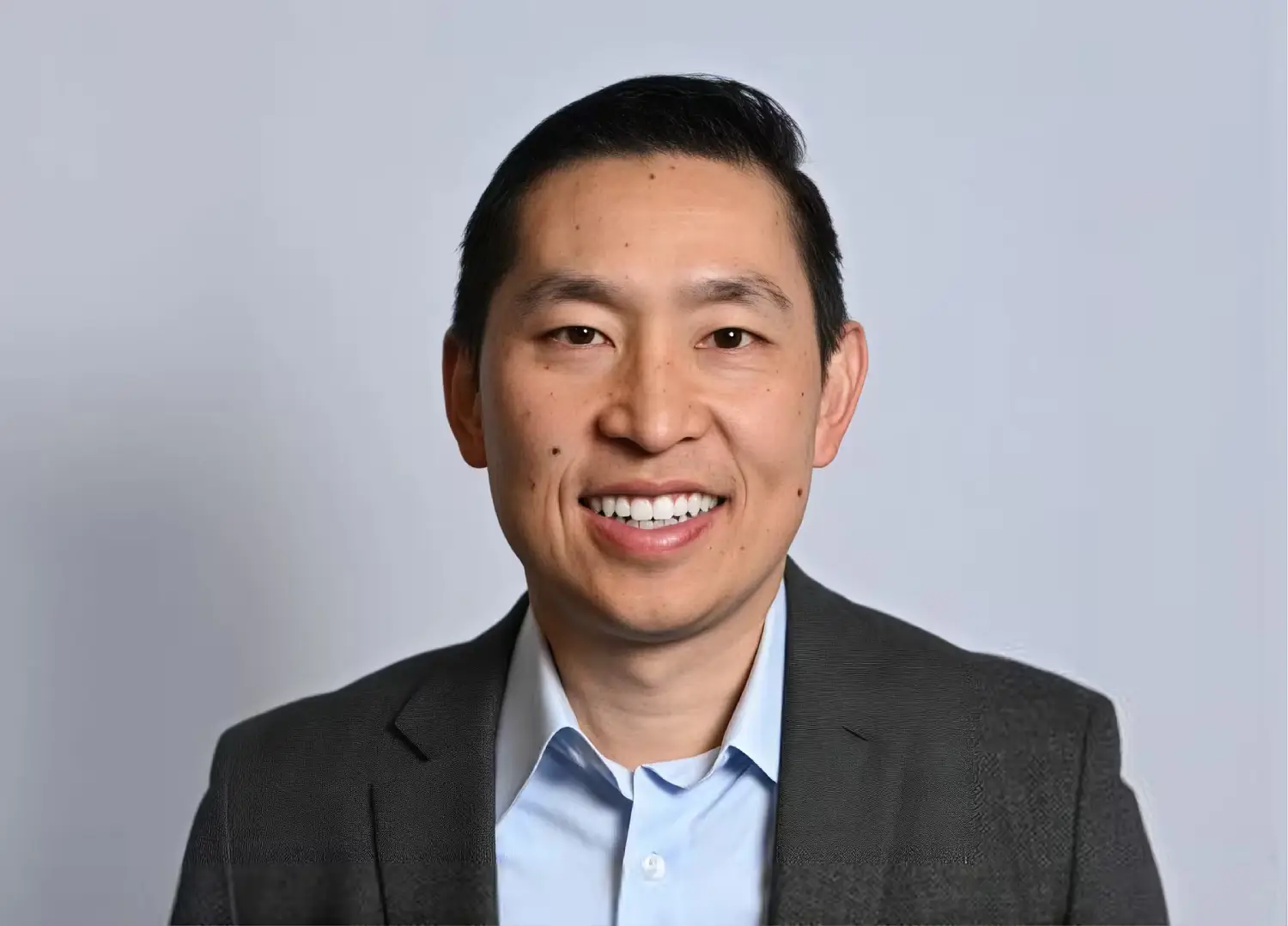
Shane Pierson - Bio
Shane Pierson is a long-time SBA lending executive with nearly two decades of national SBA origination and sales leadership experience. While highly successful in production, his differentiator is building systems. Throughout multiple banks, he has repeatedly focused on transforming manual lending operations into scalable, technology-enabled workflows through automation, process design, CRM integration, digital intake, AI-assisted analysis, and operational standardization.
Today at Leader Bank, his interest extends beyond loan production into creating a modern SBA lending platform that combines relationship banking with AI, workflow automation, process mapping, and data-driven execution.



.webp)
.webp)




.webp)

.webp)

.webp)


.webp)


Knowledge is power